
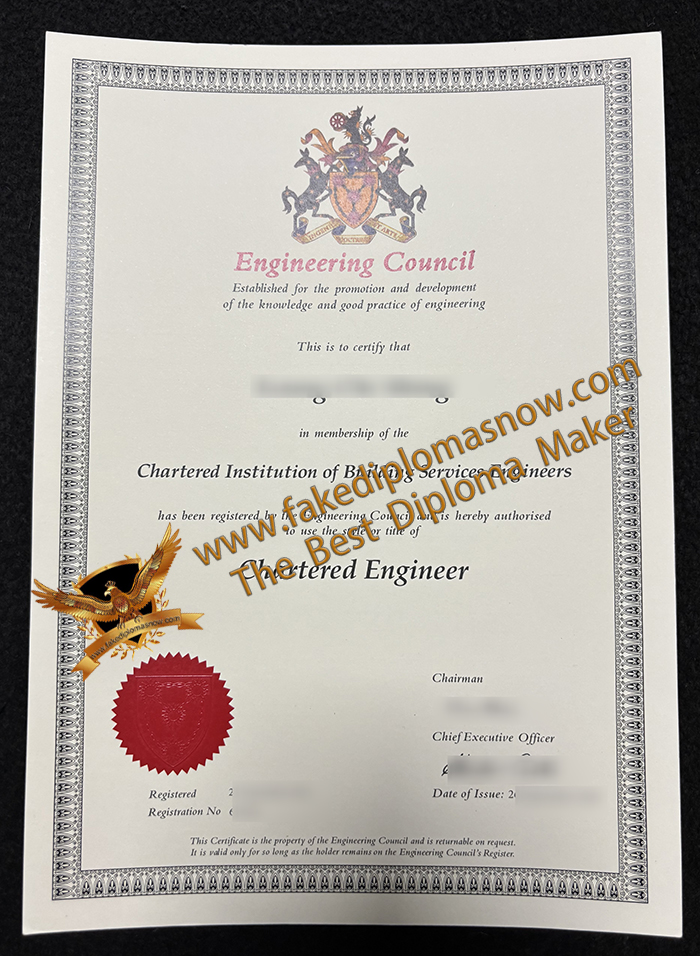
CIBSE Certificate, Engineering Council certificate, Chartered Engineer Certificate
Buy a CIBSE Certificate. Order an Engineering Council certificate. How to get a Chartered Engineer Certificate? Is becoming an engineer the right choice? The engineering industry combines practical experience with technology. In this field, you need to solve problems and explore how things work. Therefore, excellent math and science skills are essential. If you want to take on more advanced roles, project management and strategic thinking are key soft skills you’ll need. Of course, some jobs may also require creativity.
Advantages of engineering careers include: Employability – Data shows that in 2018, 85.4% of engineering graduates found employment; Salary potential – According to the latest statistics from the UK Department for Education, engineering graduates can earn an average annual income of around £32,600 (approximately 300,000 RMB); International opportunities – Top multinational companies recruit globally for various engineering-related roles. Ford, Heinz, and BP are among the top global employers of graduates.
Engineer Career Prospects The engineering industry is a broad field encompassing a variety of exciting career opportunities. From aerospace and construction to designing products using the latest technologies, testing in the healthcare and food industries, or undertaking innovative railway projects. As an engineering graduate, you can undoubtedly find career opportunities anywhere in the world, boasting excellent employment prospects.
According to *Engineering UK*, the market is projected to need 265,000 graduates annually to meet industry demands by 2024. Therefore, the demand for engineers is substantial.
Furthermore, top multinational companies recruit globally for various engineering-related roles. Ford, Heinz, and BP are among the world’s leading employers of graduates. This demonstrates the vast international opportunities available to engineers.
Where to order an Engineering Council certificate?
Different Categories of Engineering: The engineering industry is primarily divided into four categories: Chemical, Civil, Electrical, and Mechanical.
Chemical Engineering: Chemical engineering uses scientific methods to create new products from raw materials. You can participate in product development or test new materials during the design and manufacturing phases. As a chemical engineer, you can work in industries such as food production, mineral extraction and processing, mining, petrochemicals, and pharmaceuticals.
Civil Engineering: Civil engineering involves the design, testing, construction, and maintenance of the environment. Civil engineers work across environmental, geotechnical, control, structural, and transportation projects. This may involve road, bridge, and canal projects, renewable energy, drilling, and disaster response. Electrical Engineering: Electrical engineers research, design, and test new technologies and electrical systems in products and buildings. Their work spans a wide range of industries and fields, including construction and services, transportation, manufacturing and production, robotics, telecommunications, energy, and digital technologies.
Mechanical Engineering: Mechanical engineers work on all stages of product development, from research and development to design, installation, and commissioning. Most industries today rely on mechanical systems, so job opportunities exist in a wide range of sectors, from aerospace and manufacturing to construction and railroads.
Other Types of Engineering: Other types of engineering include various engineering specializations, often combinations of these four main engineering fields. These include: Aeronautical Engineering, Aerospace Engineering, Agricultural Engineering, Applied Engineering, Bioengineering, Biomedical Engineering, Electronic Engineering, Industrial Engineering, Nanoengineering, Nuclear Engineering, Software Engineering, Satellite Engineering, Systems Engineering, and Textile Engineering.
What is a CEng? CEng stands for Chartere Engineer, a British Chartered Engineer.