
Looking into Unofficial Diplomas Current Situation and Potential Risks
In today’s highly competitive job market and complex academic environment, “unofficial diplomas” or “alternative academic credentials” have gradually come into the public eye. This blog will delve into the current state of this field, its social functions, potential legal and professional risks, and how to maintain ethical boundaries in the pursuit of career advancement.
Insights into “Unofficial Diplomas”: Current Status Analysis, Potential Risks, and Legal Boundaries
I. What are “Unofficial Diplomas”?
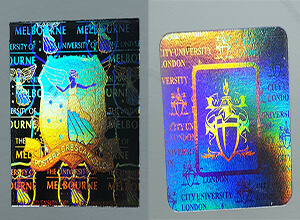
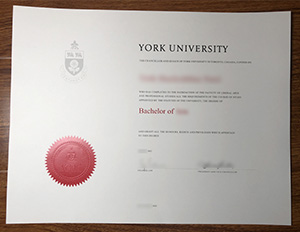
“Unofficial diplomas” generally refer to documents issued by non-educational administrative departments, non-accredited academic institutions, or individuals that imitate official degree certificates, graduation certificates, or transcripts. These documents often strive for a high degree of visual consistency with the original in terms of layout, including fonts, seals, and even anti-counterfeiting features.
On the demand side, their uses are diverse: some are used to supplement pre-employment materials, some for backup of personal files, and others for professional title evaluation in career advancement.
II. Current Status: “Demand Overflow” in the Digital Age
With the widespread adoption of digital typesetting technology, obtaining a high-definition, visually authentic certificate has become easier than ever before. Currently, this field exhibits the following characteristics:
Rapid Response: Traditional replacement procedures can take months, while modern typesetting services can produce images within 24 hours.
Exquisite Reproduction: High-definition resolution of 1K or even 4K, combined with in-depth research into the typesetting logic of specific universities, makes it difficult for the average person to distinguish between genuine and fake.
Diverse Applications: From domestic professional title evaluations to supplementary materials for overseas academic certification, unofficial diplomas attempt to fill the gaps left by “lost originals” or “cumbersome procedures.”
III. Potential Risks: A “Time Bomb” Behind the Workplace
While “unofficial diplomas” may solve the immediate problem of missing materials in the short term, the underlying risk chain cannot be ignored:
1. Transparency of Background Checks: Modern large enterprises, especially multinational corporations and state-owned enterprises, generally employ third-party background check agencies. These agencies not only verify the visual authenticity of the diploma but also directly connect to the China Higher Education Student Information System (CHESICC), the Ministry of Education’s Overseas Study Service Center, or the university’s database. Once a data mismatch is discovered, the candidate will face immediate blacklisting for dishonesty.
2. The Severity of Legal Consequences
Legally, possessing or using unofficial documents or certificates is a high-risk activity.
Document Forgery: Many countries have explicit criminal provisions for forging or altering academic credentials.
Fraud Risk: If one uses unofficial diplomas to obtain positions, stipends, or academic awards that do not belong to them, it may constitute economic fraud.
3. Permanent Damage to Personal Reputation
The workplace is a closed circle. Once dismissed due to diploma forgery, the record may be entered into industry talent pools or credit reporting systems. This kind of “stain” cannot be repaired by any typesetting technology.
IV. The Boundary Between Law and Morality: Where are the “Safe Zones”?
In discussing this topic, we must clarify the boundary between “typesetting replication” and “legal forgery.”
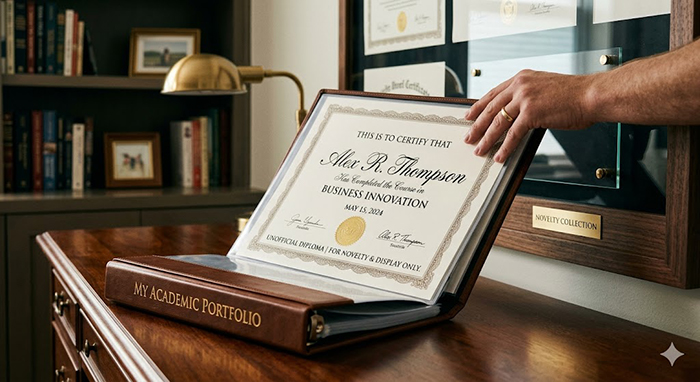
Legitimate “Typesetting and Reproduction”: If a user possesses genuine academic credentials and seeks professional typesetting services to reproduce a copy for personal display or commemoration simply because the original document is lost or damaged, this is generally considered a personal act.
Illegal “Identity Forgery”: If a user has never obtained a relevant degree but attempts to “create” one through unofficial channels and submit it to formal administrative approvals or job application processes, this is clearly illegal.
V. Three Suggestions for Career Developers:
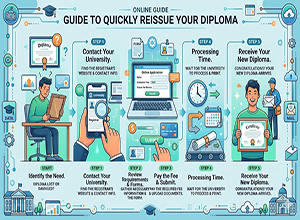
First, Official Replacement: No matter how cumbersome the process, documents obtained through official channels from your alma mater or the Ministry of Education are always the only reliable proof.
Establish a Personal “Digital Backup Library”: Upon receiving the original document, scan and save a 4K high-definition electronic copy and store it in the cloud for future use.
Honestly Address Career Gaps: If insufficient academic credentials are due to academic regrets, modern society offers abundant adult education, online certificates (such as Coursera, edX), and professional skills certifications. These officially recognized records of continuous learning are far more convincing than an unofficial “polished paper” document. In conclusion, “unofficial diplomas” are a product of both technological advancement and workplace anxiety. While they may offer a certain “comfort” or “convenience” visually, the legal and professional risks they carry hang like a Damocles’ sword.
On the path to career advancement, authenticity is the highest form of presentation, and integrity is the most valuable certificate. We advocate protecting personal rights through legitimate channels and using genuine professional skills to open the door to your ideal career. Order diploma.