
UK driving licence 2026
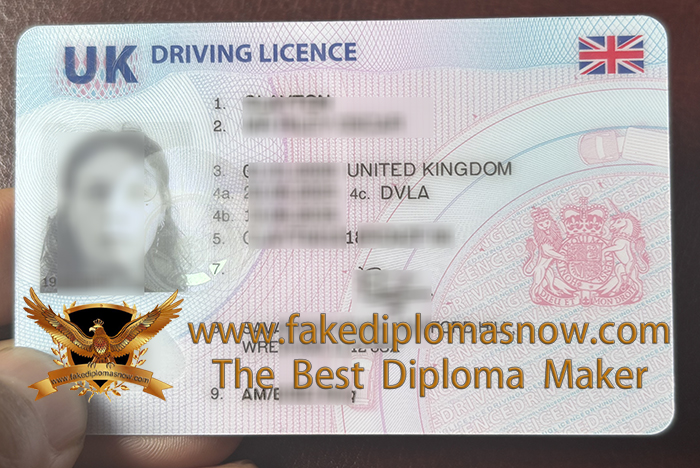
UK Driving License: A Complete Guide from Beginner to Full Driver In the UK, a driving license is more than just a permit to drive; UK driving licence 2026. it’s a crucial legal document that serves as both identification and a qualification to drive. Currently, approximately 41 million people in the UK hold valid driving licenses. Whether you’re a UK resident or an international student planning to study there, understanding the UK driving license system, its categories, and the application process is an essential step in integrating into local life.
I. Basic Types and Legal Requirements of Driving Licenses Driving licenses in the UK are issued and managed by the Drivers and Vehicles Licensing Authority (DVLA). The law clearly stipulates that a valid driving license corresponding to the type of motor vehicle must be held to drive any motor vehicle. Depending on the driver’s qualifications, driving licenses are mainly divided into two statuses:
**Provisional Licence**: Commonly known as a “learner’s license” or “provisional license.” This is a legal document used to learn to drive on the road before passing all driving tests. The holder must drive under the supervision of a qualified companion, and the vehicle must display an “L” plate (Learner’s plate).
**Full Licence:** A full driver’s license obtained after passing both the theory and road tests. Holders are authorized to drive vehicles within the permitted vehicle class independently.
Since 1998, the UK has implemented photocard licenses, replacing traditional paper licenses. Current photocard licenses are valid for 10 years and must be renewed upon expiration; failure to do so may result in a fine of up to £1000.
II. Driver’s License Categories and Vehicle Classes The back of a UK driver’s license contains a code consisting of letters and numbers. Letters represent different vehicle classes, while numbers indicate driving conditions (e.g., “01” indicates the requirement to wear glasses or contact lenses).
Small Vehicle (Car) Category
Category B: This is the most common private car driver’s license category. If the test was passed on or after January 1, 1997, the holder can drive vehicles with a maximum authorized gross vehicle weight of 3500 kg, carrying no more than 8 passengers, and towing a trailer weighing no more than 750 kg. If the total weight of the trailer and vehicle does not exceed 3500 kg, a heavy trailer weighing over 750 kg is permitted. Note that if you obtained your driver’s license before the aforementioned dates, you will have more lenient towing privileges (allowing a towing total weight of up to 8250 kg).
Class B Automatic (B auto): Limited to driving automatic transmission vehicles; manual transmission vehicles are not permitted.
Special Vehicle Categories
Trucks and Vans (Class C, C1): Driving vans weighing over 3500 kg requires an additional test to obtain a Class C license; Class C1 applies to medium-sized vehicles weighing between 3500 kg and 7500 kg.
Buses and Minibuses (Class D, D1): Driving buses with more than 8 passenger seats requires a Class D license; Class D1 applies to minibuses with no more than 16 seats.
Motorcycles (Class A, A1, A2): Divided into several levels based on engine displacement and power. You can drive a moped (AM class) from age 16, and a larger motorcycle (A class) only after you are 24 years of age or have held an A2 license for at least 2 years.
Agricultural and engineering vehicles (F, G, K classes): For example, a driver holding a standard B class license is actually authorized to drive agricultural tractors (F class) and lawnmowers (K class).
III. The Process of Obtaining a Driver’s License Obtaining a driver’s license in the UK follows a strict “progressive” process, with the following steps:
**Step 1: Apply for a provisional licence** Applicants must be at least 15 years and 9 months old to submit an application, but must be at least 17 years old to start driving a car. Applications can be submitted online through the DVLA website or by mail using a form (D1 form). Proof of identity, address, and payment of fees are required with the application.
**Step 2: Pass the theory test** The theory test consists of two parts: 50 multiple-choice questions on the Highway Code and 14 video tests simulating hazard perception. This test aims to assess a driver’s understanding of traffic regulations and their ability to anticipate road risks.
**Step 3: Pass the Road Test**
After passing the theory test, you can schedule a road test. The road test lasts approximately 40 minutes and is conducted by an examiner sitting in the passenger seat, providing instructions and evaluation. The test includes designated driving maneuvers such as general driving, reversing into a parking space, and parallel parking, as well as a “tell me/show me” vehicle safety inspection Q&A session.
**Step 4: Obtain a Full License**
After passing the road test, candidates can send their test pass certificate (D10 form) to the DVLA to exchange for a full driver’s license; alternatively, the examiner can process it on-site.
IV. Regulations for International Driving Permit Conversion For UK residents or international individuals who are about to become UK residents, the UK has clear regulations regarding the validity period of foreign driving licenses:
EU and Designated Country/Region Driving Licenses: Holders of driving licenses from the EU, Switzerland, and “designated countries/regions” (such as Australia, Canada, Hong Kong, Japan, New Zealand, South Korea, Singapore, South Africa, etc.) can drive in the UK for 12 months with their original license and apply for a UK driving license without further testing within 5 years.
Other Region Driving Licenses: If from a non-designated country/region, you can drive in the UK for 12 months. After this period, you must apply for a provisional licence and retake the theory and road tests to obtain a UK driving license.
V. Renewal and Change Obligations The accuracy of driving license information is crucial. If there are changes to your name, address, etc., you must promptly notify the DVLA to update your driving license information; otherwise, you may face legal penalties. Furthermore, photocard licence holders must renew their photograph every 10 years to maintain the validity of their driving license.
Whether serving as proof of legal driving or as identification in situations such as job hunting, renting accommodation, or purchasing insurance, a UK driver’s license plays a vital role. Obeying traffic regulations and properly managing your driver’s license is not only a sign of respect for the law but also a responsibility for your own safety.