
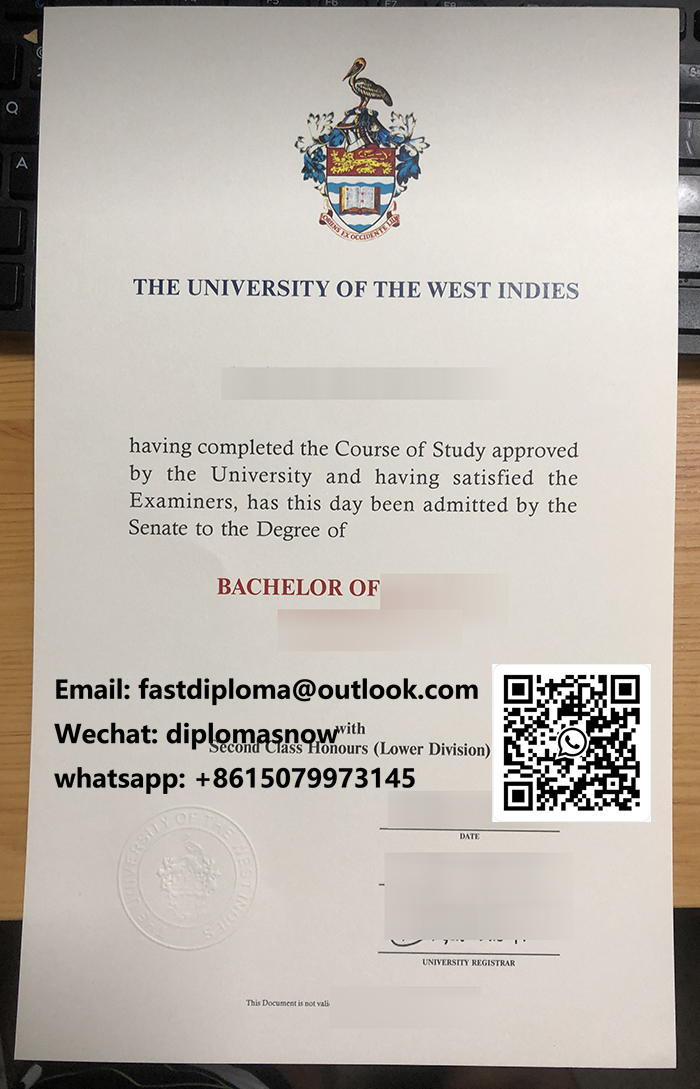
University of the West Indies degree
The University of the West Indies (UWI) is the oldest, largest, and most influential institution of higher education in the Caribbean. Order University of the West Indies degree. Make a University of the West Indies diploma. It is not a single-campus university, but a regional university system comprised of multiple campuses, countries, and non-independent territories. Its roots are deeply embedded in the academic traditions of the British colonial era, yet it shines uniquely in the fertile ground of the Caribbean’s diverse cultures.
The history of the University of the West Indies dates back to 1948, initially established as a college in Mona, Jamaica, operating as an affiliated college of the University of London. In 1962, with the independence of Jamaica and Trinidad and Tobago, the college officially received a Royal Charter, becoming an independent regional university and changing its name to the University of the West Indies. This historical background naturally allows it to inherit the rigorous academic style of British higher education, while simultaneously shouldering the historical mission of cultivating local elites for the emerging Caribbean nation and promoting regional integration.
Today, the University of the West Indies has developed into a university system with three main campuses: Mona Campus in Jamaica, St. Augustine Campus in Trinidad and Tobago, and Cave Hill Campus in Barbados. In addition, it has open campuses and non-independent country centers in Caribbean countries such as Antigua and Barbuda, the Bahamas, and Belize, extending its higher education resources throughout the English-speaking Caribbean region through a combination of distance learning and on-site teaching. This unique “one university, multiple countries” model makes it one of the most transnational universities in the world. Where can I get a University of the West Indies degree?
In terms of academic strength, the University of the West Indies is renowned for its humanities and social sciences, medicine, and law. Its law school is a major center for legal education in the Caribbean, producing a large number of judges, lawyers, and legal professionals for numerous island nations, and has had a profound impact on the development of the region’s legal system and the establishment of Caribbean courts. Its medical school is a cradle of medical talent in the region, with its research often focusing on tropical diseases, public health, and other areas closely related to the Caribbean. Furthermore, the University of the West Indies possesses unique research advantages in disciplines such as cultural studies, history, environmental science, and sustainable development, thanks to its advantageous geographical location and rich cultural resources.
As a knowledge center in the Caribbean, the University of the West Indies is not only an academic institution but also a vital participant in the region’s intellectual, cultural, and political life. It hosts the Caribbean’s largest academic library system, publishes numerous important academic journals, and regularly hosts regional academic conferences. Its campus culture is closely intertwined with Caribbean society; local art forms such as reggae and calypso music are frequently featured in campus activities, while debates on issues such as regional integration, climate change, and postcolonial development are a regular part of campus intellectual life.
Graduates of the University of the West Indies are found all over the world, particularly in North America, the United Kingdom, and Caribbean countries, playing key roles in politics, economics, law, medicine, and the arts. Several Caribbean prime ministers and Nobel laureates (such as economist Sir Arthur Lewis) have deep ties to the university.
In conclusion, the University of the West Indies is far more than just a university; it is a shared spiritual home for the people of the Caribbean, a symbol of regional integration, and a solid academic bridge connecting the Caribbean with the world. Amidst the tension between globalization and localization, it upholds the belief that “knowledge changes destiny,” continuously injecting wisdom and hope into this island-strewn seascape.